What is Neurofeedback?

🧠 What is Neurofeedback?

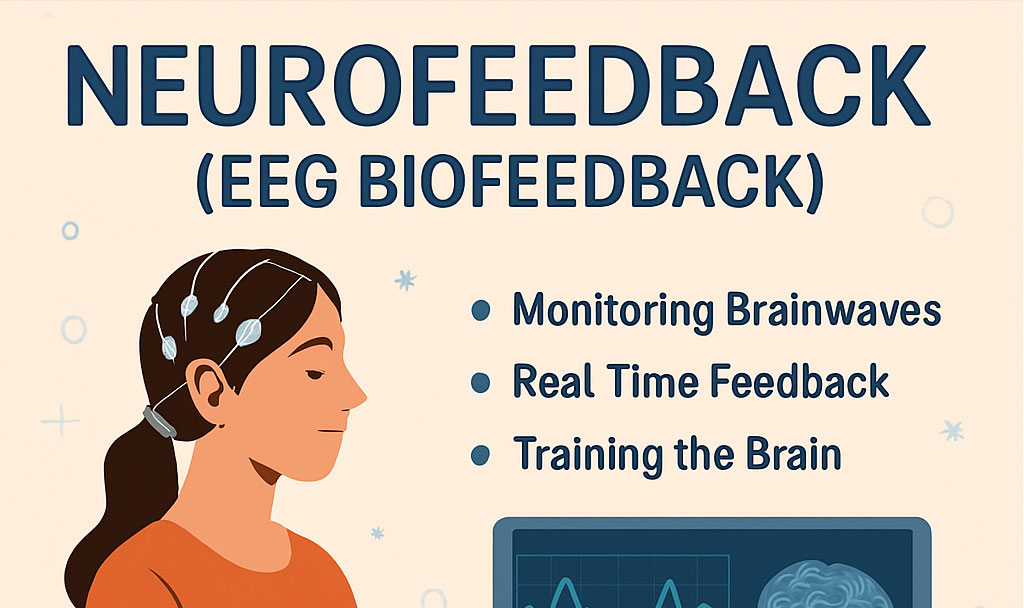
Neurofeedback is also known as EEG biofeedback. It is a non-invasive therapeutic technique that helps individuals learn to regulate their brain activity. It’s a specialized form of biofeedback that focuses specifically on brainwaves.

🔍 How does Neurofeedback Work

  • Monitoring Brainwaves: Electrodes are placed on the scalp to measure electrical activity in the brain.
  • Real-Time Feedback: A computer program provides visual or auditory cues (like a changing graphic or sound) based on the brain’s activity.
  • Training the Brain: These cues guide the brain toward healthier patterns—encouraging focus, calmness, or alertness depending on the goal.

🎯 What It’s Used For

Neurofeedback is used to support treatment for a variety of conditions:

  • ADHD
  • Anxiety and depression
  • PTSD
  • Insomnia and sleep disorders
  • Seizure disorders
  • Traumatic brain injury
  • Autism spectrum disorders
  • Age-related cognitive decline

💡 Benefits of Neurofeedback

  • Non-invasive and drug-free
  • Personalized to individual brain patterns
  • Can enhance self-awareness and emotional regulation
  • Promotes neuroplasticity—helping the brain adapt and rewire itself

⚠️ Considerations

  • Results vary: Some studies suggest benefits may be partly due to the placebo effect
  • Requires multiple sessions (often 20–40)
  • Can be costly and time-consuming
  • Not universally covered by insurance

    Commonly Reported Side Effects

  • These are typically mild and temporary:
    • Fatigue or mental exhaustion: Like a workout for your brain, sessions can leave you feeling drained.
    • Headaches or dizziness: Often due to overstimulation or poorly calibrated protocols.
    • Sleep disturbances: Some people report vivid dreams or trouble falling asleep after sessions.
    • Mood swings or irritability: Emotional fluctuations can occur as brainwave patterns shift.
    • Anxiety or overstimulation: Especially if fast brainwaves (like beta) are overtrained.

    😬 Less Common but Notable Reactions

    Some individuals have reported more serious effects:

    • Depersonalization: Feeling disconnected from body or thoughts.
    • Extended anxiety episodes: Panic-like symptoms lasting hours in rare cases.
    • Exacerbation of existing conditions: For example, chronic pain or PTSD symptoms worsening.

    🧪 What Influences Side Effects?

    • Individual variation: Genetics, brain chemistry, and mental health history play a role.
    • Practitioner skill: Inexperienced providers may misinterpret brain maps or apply incorrect protocols.
    • Type of neurofeedback: Some systems (e.g., LENS or Zengar) are more sensitive than others.

    ✅ How to Minimize Risk

    • Work with a certified and experienced practitioner
    • Start with low-intensity sessions and monitor reactions
    • Ensure a comprehensive brain map (QEEG) is done before training
    • Keep a journal of symptoms and progress
  • Read more about the Biofeedback devices here
Simple Routine for ADHD Adults

Simple Routine for ADHD Adults

Here is a comprehensive, yet simple plan for ADHD adults whose symptoms include being unable to finish tasks and moving from one idea to another. The “Finish-Line” Blueprint For ADHD adults who start everything, finish nothing, and chase every new idea (Keep this...

Can ADHD Develop Later in Life

Can ADHD Develop Later in Life

Can ADHD Develop Later in Life? The Truth About Adult-Onset Symptoms  Sometimes people wonder late in life whether they or someone they know as an adult may have developed ADHD. So the question is - Can ADHD develop later in life or is it 'New' ADHD or Just...

Will ADHD Go Away?

Will ADHD Go Away?

Do you wonder will ADHD go away with time or as you age? This is a question many people ask after receiving a diagnosis or watching a loved one struggle with symptoms. Attention Deficit Hyperactivity Disorder doesn’t simply vanish with age, but its presentation can...

Are ADHD People Smarter?

Are ADHD People Smarter?

Sometimes, people wonder if ADHD people are smarter than the rest. Short answer: No. ADHD does not automatically make someone smarter or less intelligent. People with ADHD span the entire IQ range—low, average, and very high—just like the rest of the population Key...

Can ADHD Cause Anxiety?

Can ADHD Cause Anxiety?

If you are wondering - can ADHD cause anxiety? then here is your answer. Yes—ADHD can both cause and intensify anxiety, and the two conditions commonly occur together. How strong is the link? 50 % of adults with ADHD also meet criteria for at least one anxiety...

Can ADHD be Cured?

Can ADHD be Cured?

Wonedring can ADHD be cured? The short answer is No - it cannot be cured fully. At this time there is no cure for ADHD—it is a lifelong neurodevelopmental condition. Leading medical centers and guideline bodies all state the same: “There’s no cure for ADHD, but...

How ADHD is TREATED?

How ADHD is TREATED?

How ADHD is treated? Attention-Deficit/Hyperactivity Disorder management ADHD is usually treated with a “toolbox” approach: medication, psychological/behavioral interventions, lifestyle change, and (when needed) school or workplace accommodations. All evidence-based...

Can ADHD Get Worse With Age?

Can ADHD Get Worse With Age?

Many parents wonder can ADHD get worse with age? Short answer: ADHD itself doesn’t automatically get worse as you get older, but the way it affects you can feel worse if life circumstances change and your coping supports don’t keep up. Below is the longer,...

What is ADHD?

What is ADHD?

Wondering exactly what is ADHD? ADHD stands for Attention-Deficit/Hyperactivity Disorder. It's a neurodevelopmental disorder that affects both children and adults and is characterized by persistent patterns of inattention, hyperactivity, and impulsivity that interfere...

Does Autism Present Differently in Men and Women?

Does Autism Present Differently in Men and Women?

People often ask – does autism present differently in men and women? Yes—clearly and consistently, even though the official diagnostic criteria are the same. Below is a side-by-side look at how autistic traits tend to show up and get missed in males vs. females, plus...

Are Autism and ADHD Linked?

Are Autism and ADHD Linked?

Parents of autistic children often wonder - are autism and ADHD linked? Yes—they are distinct conditions, but they travel together so often that clinicians call them “frequent companions” rather than strangers. 🔗 How Strong Is the Link? Statistic What It Means 30-70 %...

How Many Autistic People are There on Earth?

How Many Autistic People are There on Earth?

Let us take a quick look at How many autistic people are there on Earth. Although the statistics is not exactly current, these are the available numbers at the time of writing this post. Latest Global Figure Source ≈ 61.8 million people (1 in 127) were autistic...