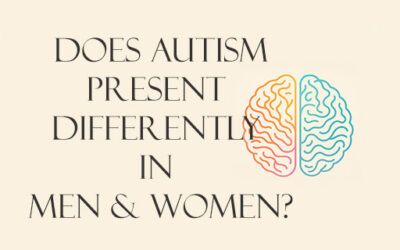
Let’s take a brief look into how Autism sees the World.
A sensory-first, plain-language tour of the autistic lens—as told by autistic voices.
🌏 The Same Planet, Different Operating System
Imagine the world is a high-definition movie—but your cinema settings are stuck in ultra-high contrast, volume maxed out, and subtitles out of sync.
That’s the default view for many autistic minds.
1️⃣ Vision: Details First, Gestalt Second
- Pixels, not pictures
– A room is 10,000 tiny edges (door hinges, carpet threads, dust motes) before it’s “a classroom.” - Light & Color
– Fluorescent bulbs flicker like strobe lights—some see 60-Hz flashes invisible to others.
– Striped shirts can vibrate and trigger headaches. - Peripheral Sensitivity
– Movement in the corner of the eye feels as loud as a shout.
2️⃣ Sound: A Thousand Tracks at Once
- No “background”
– A ticking clock, humming fridge, and distant lawnmower are three separate songs on full volume. - Filtering Failure
– Cannot tune out the teacher when a classmate is clicking a pen. - Echo Memory
– A fire alarm at 9 a.m. replays in the inner ear at 3 p.m.
3️⃣ Touch & Body Sense
- Texture Radar
– Seams on socks feel like razor wire; velvet feels like static electricity. - Proprioception Glitches
– Misjudges personal space: stands too close (seeking deep pressure) or too far (avoiding accidental touch). - Pressure Cravings
– Weighted blankets or tight hugs provide the “gravity” the body is missing.
4️⃣ Social World: Double Empathy Gap
- Facial Expressions
– Others’ micro-expressions move too fast; the face is a blur of shifting lines. - Speech Soundtrack
– Words arrive clear, tone arrives late. Sarcasm feels like a foreign accent. - Predictive Scripts
– Runs mental flowcharts:
If person says “How are you?” → default answer = “Fine, thanks.”
Any deviation = system crash.
5️⃣ Time & Sequences
- Now vs. Not-Now
– 10 a.m. and 10 p.m. can feel equally distant; schedules need visual countdown timers. - Hyper-focus Windows
– 3-hour deep dive into train timetables feels like 3 minutes; outside world disappears.
6️⃣ Emotional Weather
- Delayed Receipts
– Anger arrives 3 hours after the argument, like a slow-motion text. - Sensory-Emotion Blend
– Bright supermarket lights = instant anxiety spike, even though nothing “bad” happened.
7️⃣ Safe Filters & Coping Tools
| World Too Harsh | World Too Dull |
| Noise-canceling headphones | Stim toys (spinners, clickers) |
| Sunglasses indoors | Special interests (maps, anime, fungi) |
| Weighted lap pad | Rocking or pacing |
🖼️ One-Sentence Summaries From Inside
- “I see every crack in the pavement; you see the road.”
- “My ears don’t have volume knobs; they have toggle switches labeled ‘everything’ or ‘nothing.’”
- “Social interaction is live improv with a script I never received.”
Final Thought
It is important to understand how autism sees the world. Autism doesn’t make the world bigger or smaller—it makes it louder, faster, brighter, and more unpredictable.
Understanding the autistic lens helps everyone adjust the lighting, sound, and script so we all watch the same movie—together.