Why does my heart race when I am not exercising? This is a question that many ask.
💬 “I’m just sitting here—so why is my heart pounding?”
If that’s the thought running through your mind, know this: you’re not alone, and your experience is valid. A racing heart when you’re not physically active can feel unsettling, confusing, and even scary. But before jumping to the worst-case scenario, let’s explore what might be happening—and more importantly, what you can do about it.
🔍 What Causes a Racing Heart at Rest?
There’s a wide spectrum of reasons your heart may speed up when you’re not exercising, ranging from temporary stress to more systemic factors. Here are a few common ones:
- Stress or anxiety episodes You might not feel anxious—but your body can still respond as if it is.
- Hormonal shifts Caffeine, dehydration, PMS, or thyroid imbalances could play a role.
- Nervous system imbalance When the sympathetic (fight-or-flight) system dominates over the parasympathetic (rest-and-digest).
- Poor sleep quality Especially if you’re waking up with heart palpitations.
- Nutrient deficiencies Low levels of magnesium or potassium can impact heart rhythm.
🧬 Let’s Talk About HRV (Heart Rate Variability)
HRV measures the subtle changes in time between your heartbeats. A higher HRV is often linked to better health, resilience, and relaxation. If your heart races at rest, it might mean your HRV is low, and your body is stuck in fight-or-flight mode.
🌿 5 Techniques to Calm a Racing Heart
- Box Breathing (4-4-4-4 pattern) Activates parasympathetic response and settles the rhythm.
- Progressive Muscle Relaxation Slowly tensing and releasing muscle groups to signal safety to the brain.
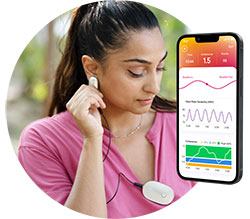
- AI-powered HRV biofeedback apps
- Inner Balance by HeartMath: Teaches heart-focused breathing and coherence.
- Journaling for Emotional Awareness Sometimes your body is reacting to something your mind hasn’t yet processed.
- Limit stimulants after midday Caffeine and sugar late in the day can disrupt circadian rhythms and cardiac pacing.
💡 Psychology Principle: Interoceptive Awareness
This refers to how well you sense internal bodily signals—like heartbeat, breath, or hunger. Practices like biofeedback increase this awareness and train your brain to interpret signals as non-threatening, reducing sympathetic activation.
🔗 Related Articles You’ll Find Helpful:
- What Is Heart Rate Variability—and Why Should You Care?
- How Stress Affects Your Heart—and What You Can Do About It
- Evening Habits That Calm a Racing Heart
🌈 You’re Not Broken—You’re Just Listening Deeply
Experiencing a racing heart doesn’t mean something is fundamentally wrong with you. In fact, it could mean you’re sensitive, aware, and in tune with your body. The tools you choose today can help retrain your system toward safety and calm.
Medical Disclaimer
This article is intended for informational and educational purposes only and does not constitute medical advice, diagnosis, or treatment. If you experience persistent or severe symptoms—such as heart palpitations, chest pain, dizziness, or shortness of breath—please consult a qualified healthcare professional. Your doctor can help determine the underlying cause and offer appropriate medical care tailored to your needs.
✅ Action Plan to Start Today –
so, if you have this question – Why does my heart race when i am not exercising, consider these techniques –
- Try box breathing for 3 minutes in the morning
- Use the Inner Balance app to measure your HRV before bed
- Reflect in a journal: “What might my heart be trying to say?”
- Reduce caffeine intake after 2 PM for the next 5 days
- Bookmark and revisit this post when your heart feels unsettled
- Buy the HRV Feedback devise like Inner Balance, and practice breathing with it.