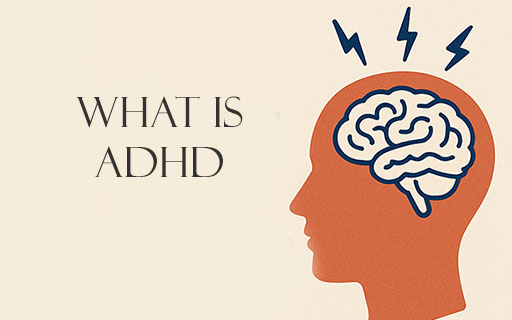
Wondering exactly what is ADHD?
ADHD stands for Attention-Deficit/Hyperactivity Disorder. It’s a neurodevelopmental disorder that affects both children and adults and is characterized by persistent patterns of inattention, hyperactivity, and impulsivity that interfere with daily functioning or development.
Core Symptoms:
-
Inattention: Difficulty sustaining focus, following through on tasks, organizing activities, or paying attention to details.
-
Hyperactivity: Excessive movement, fidgeting, or an inability to stay seated when expected.
-
Impulsivity: Acting without thinking, interrupting others, or having trouble waiting for one’s turn.
Types:
-
Predominantly Inattentive Presentation – mainly inattention.
-
Predominantly Hyperactive-Impulsive Presentation – mainly hyperactivity and impulsivity.
-
Combined Presentation – both inattentive and hyperactive-impulsive symptoms.
Causes:
The exact cause isn’t fully understood, but research points to genetics, brain structure and function differences, and environmental factors (like prenatal exposure to toxins or low birth weight).
Diagnosis:
Diagnosed by a qualified professional (like a psychiatrist or psychologist) using criteria from the DSM-5-TR. It involves clinical interviews, behavior rating scales, and ruling out other causes.
Treatment:
-
Medication: Stimulants (e.g., methylphenidate, amphetamines) or non-stimulants.
-
Therapy: Behavioral therapy, cognitive behavioral therapy (CBT), parent training (for kids), or coaching.
-
Lifestyle: Structure, routines, organizational tools, and support systems.
In Adults:
ADHD often persists into adulthood but may look different—more internal restlessness, procrastination, or disorganization than overt hyperactivity.